
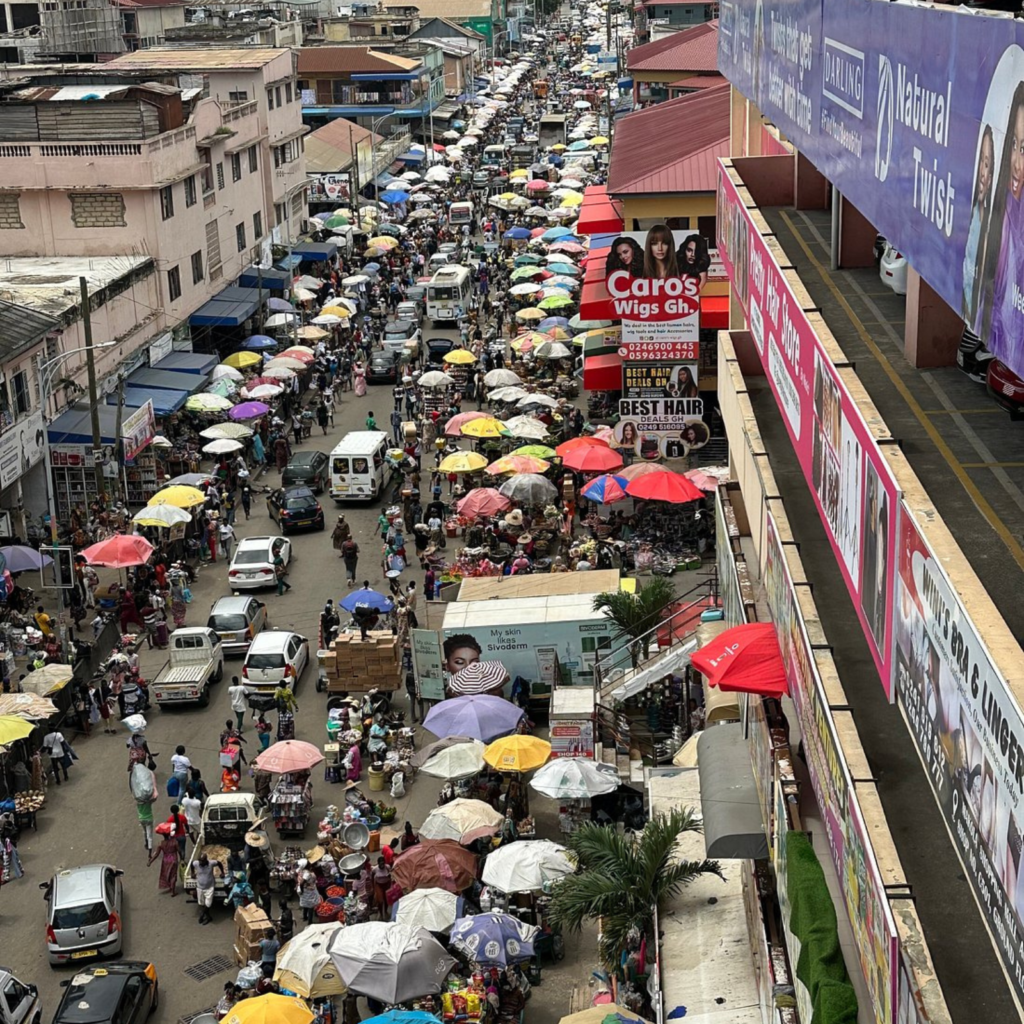
Nearly 20 million Ghanaians are now living in urban areas, increasing pressure on the country’s housing, electricity, water and sanitation facilities, according to a new report by the Ghana Statistical Service (GSS).
The Ghana in Numbers, 2025 report estimates that about 19.8 million people, representing 58.7 per cent of Ghana’s population, lived in cities and towns in 2025.
The figures highlight the country’s growing urban population and the need for government to improve housing, roads and other essential services to meet the demands of expanding communities.
Ghana recorded more people living in urban areas than in rural communities for the first time in 2010. At the time, the urban population stood at 12.55 million, compared to 12.11 million in rural areas.
The trend continued in 2021, when the urban population increased to 17.47 million, while the rural population was estimated at 13.36 million.
Despite the increase in urban settlements, housing conditions remain a major concern. The report indicates that 30.8 per cent of people living in urban areas reside in slums or informal settlements.
It also puts Ghana’s housing deficit at 1.8 million units in 2021, representing an improvement from the 2.8 million recorded in 2010. However, the GSS cautioned that the figures do not reflect whether existing houses are affordable or in good condition.
The report further revealed that the average household size in Ghana has dropped to 3.6 people, the lowest level recorded so far. This development could increase the demand for more housing units across the country.
On access to basic services, Ghana has made progress over the years. Electricity access increased from 43.8 per cent in 2000 to 86.3 per cent in 2021, while access to improved drinking water rose from 60.7 per cent to 92 per cent within the same period.
Access to improved sanitation also increased from 44.8 per cent in 2010 to 69 per cent in 2022.
However, challenges remain, as about one in seven households still lacks electricity, while nearly one in three does not have access to an improved toilet facility.
Speaking on the findings, Government Statistician Dr Alhassan Iddrisu called on authorities to use local population data when planning development projects and distributing national resources.
“Use local figures, not national averages, to decide where the next cedi goes, because averages hide differences,” he stated.
He explained that accurate population data would help government determine where additional schools, hospitals, housing facilities and other essential infrastructure are most needed.
The Ghana Statistical Service stressed that district-level information would be particularly important in identifying communities facing urgent challenges with housing, water, sanitation and electricity.
The report therefore highlights the need for development planning that responds to the specific needs of communities as Ghana’s urban population continues to grow.